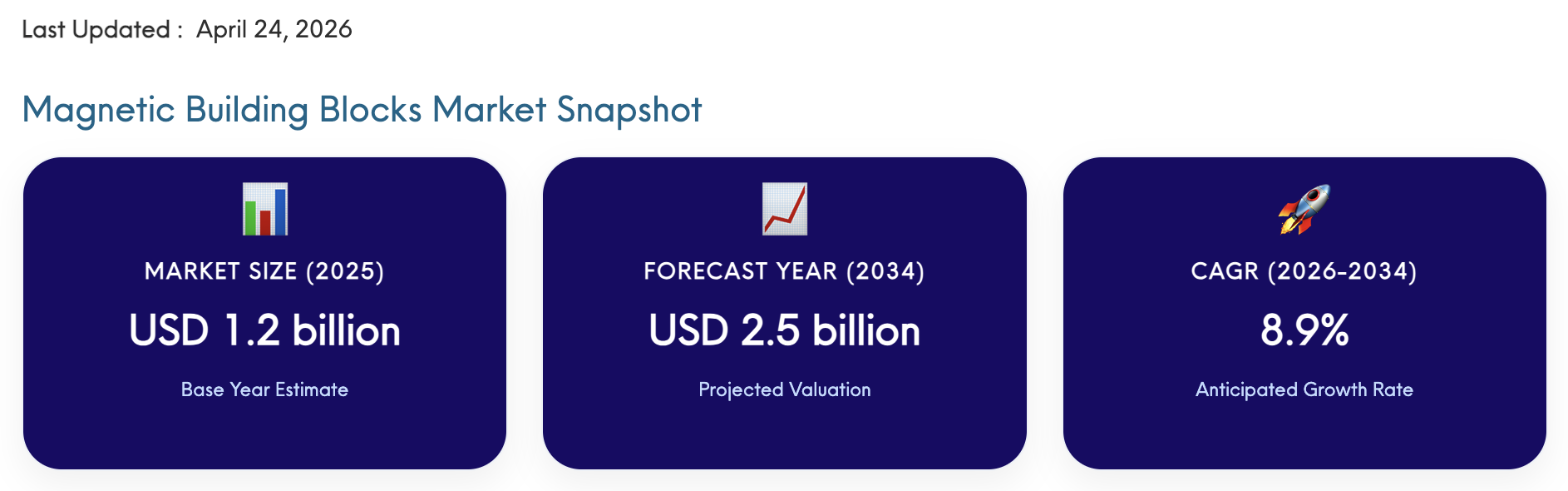
- Main application areas: supermarkets, toy stores, and others、
- Main types: Square, Triangle, Circle, Other
- Main manufacturers: LEGO, Mattel AEA Holdings、Haba、Magformers、toys p、Magna-Tiles (Valtech)、People Toy、B.Toys、 Bangbao Educational Toys Gigo Toys、 Guangdong Qimeng Toy Industry
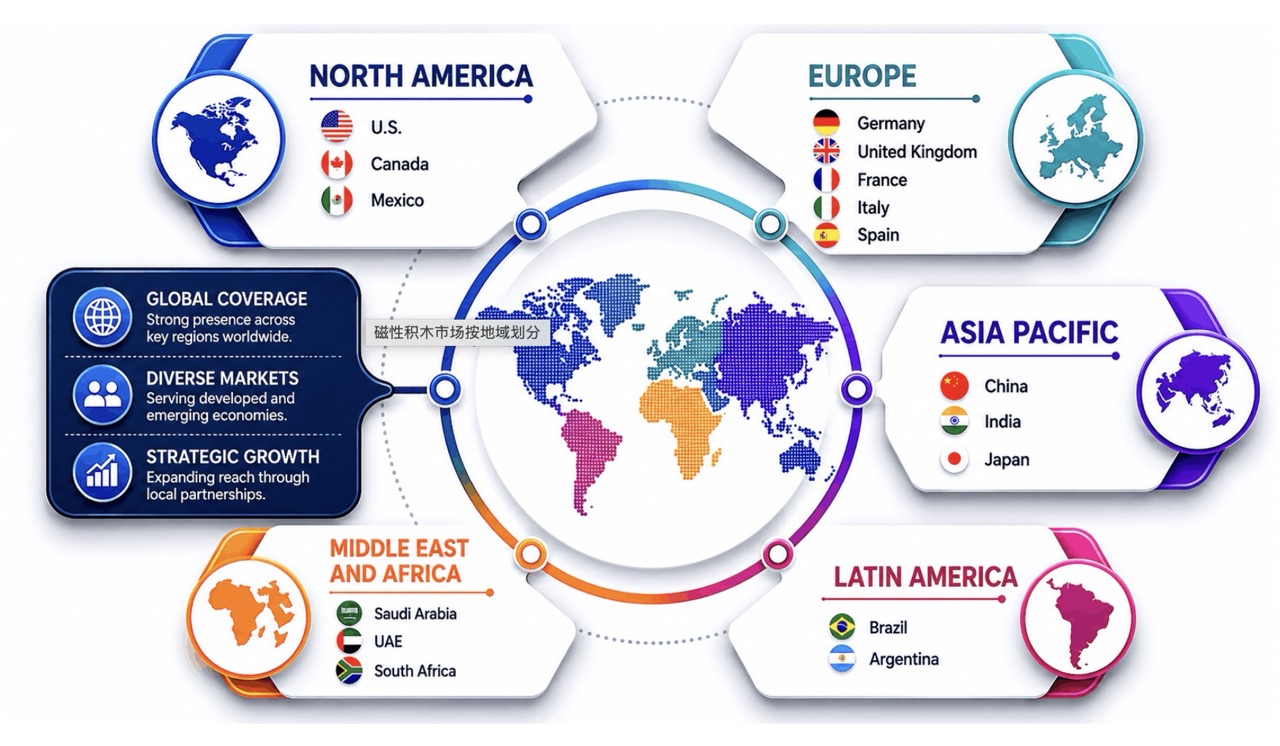
- Main regions: North America (United States, Canada, Mexico), Europe (Germany, United Kingdom, France), Asia Pacific region (China, Japan, South Korea, India), Middle East (Saudi Arabia, United Arab Emirates, Kuwait, Qatar).
Explore the main trends driving market growth
Overview of the Magnetic Building Blocks Market
The magnetic building block market is a unique niche market in the education and entertainment toy industry, characterized by the integration of magnetic technology into modular construction kits. These products utilize the unique properties of magnets, such as polarity, strength, and orientation, to achieve intuitive assembly, thereby cultivating users’ spatial reasoning ability, creativity, and STEM (Science, Technology, Engineering, and Mathematics) skills. Unlike traditional building blocks, magnetic building blocks are able to construct more complex, stable, and flexible structures, making them popular among different groups of people, including children, educators, and design professionals.
The emergence of this market stems from the convergence of technological innovation, the evolution of educational models, and the shift of consumer preferences towards experiential learning tools. With the increasing integration of digital and physical learning environments, magnetic building blocks as tactile interfaces can effectively supplement digital courses and strengthen STEM (Science, Technology, Engineering, and Mathematics) foundational concepts through hands-on practice. In addition, with the increasing emphasis on early childhood development, the attractiveness of magnetic building blocks has also increased. Teaching aids that can promote cognitive and motor skills development in early childhood are highly favored by parents and educational institutions.
The current market acceleration is driven by various macro and industry-specific factors. The flourishing development of STEM education programs supported by government policies and private sector investment on a global scale has created a favorable environment for market growth. At the same time, technological advancements in magnetic materials such as neodymium magnets have improved the safety, durability, and magnetic strength of products, enabling more complex designs and a wider range of applications. In addition, the COVID-19 epidemic highlights the importance of home learning tools, prompting more parents to seek interactive education outside the traditional classroom, thus improving the use of home learning tools.
The value creation of this market mainly comes from innovation in product design, material science, and user experience. Leading manufacturers invest heavily in research and development to develop magnet structures that can maximize stability and minimize safety risks such as accidental ingestion or demagnetization. The use of environmentally friendly materials and sustainable manufacturing processes further enhances product value and aligns with the growing awareness of environmental protection. Various distribution channels, from e-commerce platforms to toy specialty stores, are key nodes for market expansion, enabling rapid dissemination of products in different regions.
Market control is concentrated in the hands of a few global companies with mature brand awareness, extensive distribution networks, and strong research and development capabilities. Companies such as Magna Tiles, Picasso Files, and Playmags dominate the market and maintain a competitive advantage through their patent portfolio and proprietary magnetic technology. However, the entry of emerging startups and regional manufacturers is often driven by localized innovation and cost advantages, which brings a dynamic competitive environment to the market and may reshape the market share pattern over time.
The structural factors that will affect the future development of the magnetic building block market include technological progress, regulatory frameworks, and changes in consumer behavior. The advancement of magnetic materials, such as the development of safer, stronger, and more environmentally friendly magnets, is expected to give rise to new product functionalities and applications. Regulatory considerations, especially safety standards and import and export policies, will affect production practices and market access. In addition, the growing demand from consumers for customizable, STEM (Science, Technology, Engineering, and Mathematics) – oriented, and environmentally friendly toys will drive manufacturers to continue innovating, thereby promoting rapid product development and diversification.
From a broader industry perspective, the magnetic building block market is at the intersection of educational technology, toy manufacturing, and digital integration. The rise of digital manufacturing tools such as 3D printing has made customized magnet design and personalized configuration possible, further expanding the potential of the market. In addition, combining augmented reality (AR) and virtual design tools with physical building blocks is expected to redefine user engagement and learning outcomes, creating a hybrid experience that integrates tactile and digital domains.
The macro driving factors supporting the market include manufacturing automation, regulatory measures aimed at promoting safety and sustainable development, and demand shifts brought about by demographic changes. Automation has improved production efficiency and quality control, reduced costs, and enabled rapid iteration of products. Regulatory frameworks such as ASTM F963 and EN71 safety standards ensure consumer safety, but also bring compliance costs that affect product design and pricing strategies. The demographic changes, especially the rise of the middle class in emerging economies and the increasing emphasis on early childhood education, have significantly expanded the potential customer base.
The fundamental purpose of this market is to empower education and enrich entertainment activities. Magnetic building blocks can promote cognitive development, spatial perception, and enhance STEM literacy, which is in line with global education development priorities. Its versatility also makes it suitable for professional applications such as architecture, engineering, and design prototyping, where rapid conceptualization and visualization are crucial. This dual-use highlights the strategic importance of magnetic building blocks in both consumer and professional fields.
The transformation of market structure is characterized by technological integration, product diversification, and the evolution of distribution models. The emergence of intelligent features such as embedded sensors, interconnectivity, and application based control marks the development direction of intelligent building block sets. Market participants are also exploring new materials, such as biodegradable magnets and environmentally friendly plastics, to achieve sustainable development goals. Distribution channels are expanding from traditional retail to online markets, educational platforms, and direct to consumer models, thereby expanding coverage and enhancing customization capabilities.
The impact of generative artificial intelligence on the magnetic building block market
Generative artificial intelligence is expected to completely change the magnetic building block market, achieving unprecedented customization, design innovation, and production efficiency. With the help of advanced algorithms, artificial intelligence can assist in creating complex and optimized magnet structures, thereby enhancing stability and safety, and reducing the need for repeated experimentation in the product development process. The integration of this technology accelerates the innovation cycle, enabling businesses to quickly iterate new concepts that meet consumer preferences and safety standards.
The personalized potential driven by artificial intelligence is a significant impact, as consumers can customize exclusive packages based on specific educational or entertainment needs. Artificial intelligence platforms can analyze user behavior, learning goals, and skill levels to recommend or even generate customized configurations, thereby enhancing user engagement and learning outcomes. This level of customization was previously difficult to achieve on a large scale, but now it has opened up new sources of income and market areas.
In addition, generative artificial intelligence can simplify manufacturing processes, optimize magnet placement, material usage, and assembly sequence through simulation and predictive modeling. This can reduce waste, shorten product launch time, and ensure compliance with safety regulations, which is particularly important given the safety sensitivity of magnetic toys. Artificial intelligence driven quality control systems can also detect defects or inconsistencies in the production process, thereby improving the overall reliability of products and consumer trust.
In terms of supply chain management, artificial intelligence algorithms can accurately predict demand fluctuations, enabling manufacturers to proactively adjust inventory levels. As the market expands towards emerging economies, demand patterns become more difficult to predict, which is particularly important. In addition, artificial intelligence can promote smarter logistics, reduce costs, and shorten delivery times, thereby supporting rapid market penetration and improving customer satisfaction.
From a competitive perspective, the integration of artificial intelligence may be more advantageous for existing enterprises with strong research and development resources and technological infrastructure, thereby potentially setting new barriers for smaller entrants. However, this also provides opportunities for innovative startups to utilize artificial intelligence tools for rapid prototyping and market testing, thereby disrupting the traditional product development cycle. As artificial intelligence gradually integrates into the industry structure, it will drive the product ecosystem towards a more intelligent, adaptable, and user centric direction, fundamentally changing the competitive landscape.
Finally, the application of generative artificial intelligence aligns with broader industry trends such as digital transformation, IoT integration, and intelligent manufacturing. With the maturity of these technologies, the magnetic building block market will develop into a more interconnected and data-driven ecosystem, where product design, production, and user interaction will be seamlessly integrated. This development is expected to unleash new value, enhance safety and sustainability, and redefine the boundaries of modular building block toys and educational tools.
Key Insights into the Magnetic Building Blocks Market
Overview of market turning points: Currently, the market is transitioning from a growth stage driven by innovation and demand expansion to a more mature stage, where differentiation and technology integration are crucial. The increase in research and development investment, the growth in the number of patent applications, and the popularization of intelligent functions indicate that the market is at a turning point, moving towards more complex and competitive integration.
Three major structural growth drivers
The technological changes in magnetic materials, safety standards, and advances in digital integration (AR/AI) are giving rise to new product functionalities and applications, expanding the market scope from traditional toys to professional prototyping and design.
Regulatory favorable factors such as global safety regulations and sustainable development requirements force manufacturers to innovate in safety features, environmentally friendly materials, and transparent supply chains, thereby improving product standards and consumer trust.
Demand shift: The increasing emphasis on STEM education, distance learning, and experiential games for young children is shifting consumer preferences towards customizable, interactive, and digitally connected building packages.
Key constraints and friction points: Supply chain disruptions, especially in the procurement of magnetic materials, pose risks to production continuity. In addition, high safety standards will increase compliance costs, and consumer concerns about magnetic safety may hinder the popularization of products, especially in areas with strict regulation.
In emerging economies, niche markets such as professional design tools, augmented reality kits, and environmentally friendly magnetic products hold enormous potential for investment returns. Regions with low market penetration rates such as Southeast Asia and Africa also provide significant growth opportunities due to the growth of the middle class population and educational reforms.
Technological disruption: The integration of AI driven design tools, IoT intelligent modules, and advanced magnetic materials is reshaping the value chain. Innovations in biodegradable magnets and manufacturing automation are also becoming key disruptive factors.
The transformation of the competitive landscape: Although established companies maintain their dominant position through patents and brand loyalty, new entrants utilizing artificial intelligence, sustainable materials, and direct to consumer channels are challenging existing companies, indicating that market leadership may shift towards a more decentralized situation.
Customer behavior evolution: Buyers are increasingly valuing safety, personalization, and educational value. The procurement model is shifting towards subscription based and online direct sales, with increasing emphasis on user generated content and community interaction.
Pricing and profit dynamics: The cost pressures brought about by fluctuations in raw materials and safety compliance are squeezing the profit margins of some companies, while high-end brands that utilize innovation and brand assets can obtain higher prices and maintain healthy profitability.
Regulatory and policy impacts: International safety standards and environmental regulations are influencing product design and manufacturing practices. Trade policies and tariffs also affect the global supply chain landscape, which in turn affects market access and pricing.
Future outlook signal (3-5 years): Driven by technological integration, expansion of application areas, and changes in consumer preferences, the market is expected to accelerate growth. The integration of artificial intelligence and intelligent functions will become the industry standard, and emerging markets will become important growth engines with the support of policy reforms and infrastructure investments.
Market size and predictive analysis of magnetic building blocks
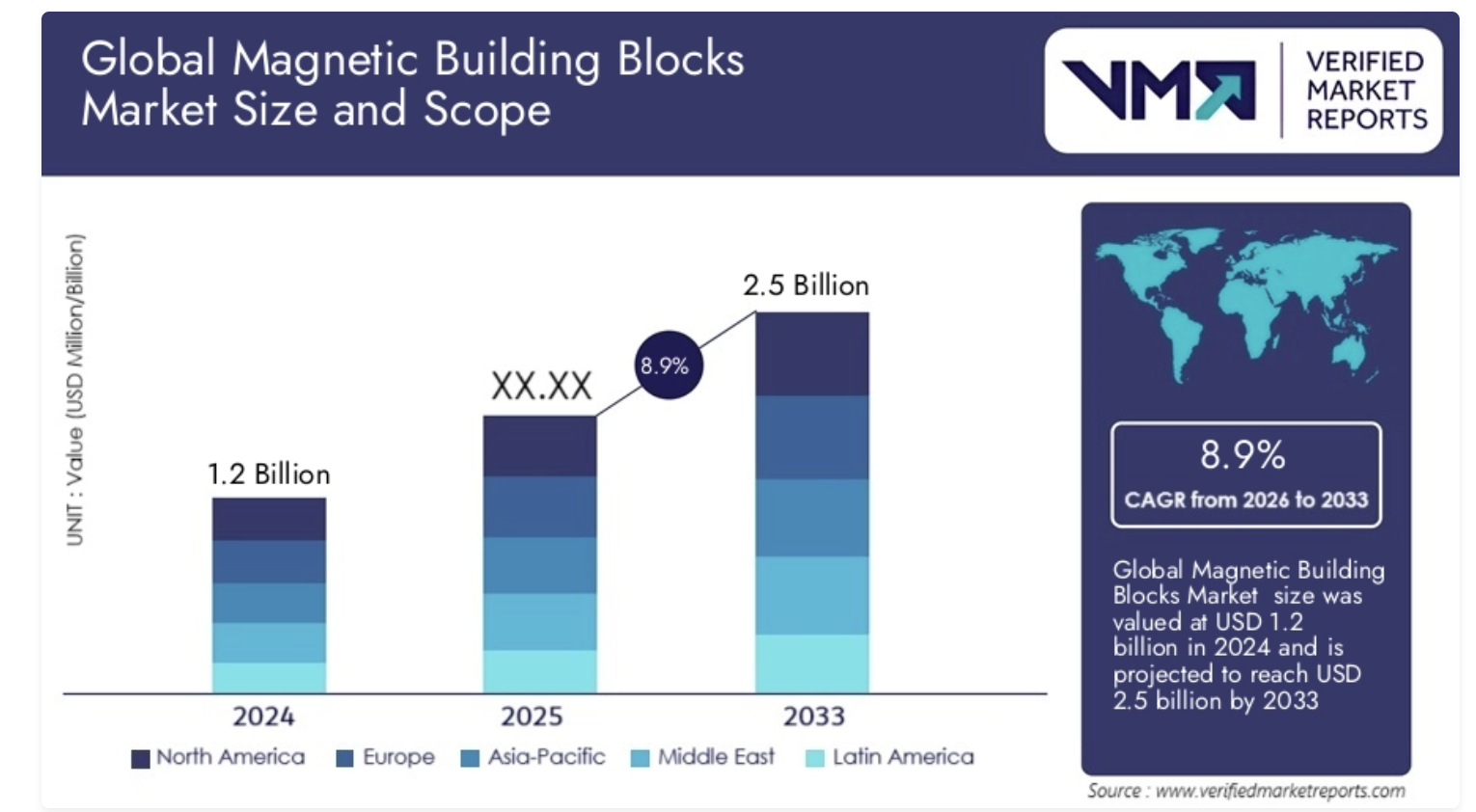
In the past decade, the magnetic building block market has shown strong growth momentum, mainly due to technological innovation, expansion of educational initiatives, and a shift in consumer preferences for experiential learning tools. It is expected that the market size will be around 1.2 billion US dollars in 2023, and will grow at a compound annual growth rate of about 8.5% by 2030, reaching 2.4 billion US dollars. This growth is due to two factors: one is demand side factors, such as the increasing demand for magnetic building blocks in early childhood education and professional prototyping fields; The second is supply side factors, such as manufacturing automation and material innovation.
The demand side driving factors are increasingly influenced by the global emphasis on STEM literacy, and governments and private institutions around the world are investing heavily in early education infrastructure. For example, the “STEM Education for All” program in the United States and similar projects in Europe and Asia have incorporated magnetic block sets into their curricula, thereby expanding their market share in institutional markets. In addition, the trend of remote and home learning triggered by the epidemic has intensified parents’ demand for toys that combine education with entertainment and contribute to cognitive development, further driving market expansion.
In terms of supply, advances in magnetic material technology, such as the application of neodymium magnets, have improved product safety and magnetic strength, enabling more complex and stable configurations. Manufacturing automation, including robot assembly and AI driven quality control, reduces costs and improves product consistency, resulting in more competitive prices and higher profit margins. In addition, the rise of direct sales channels has promoted rapid market penetration, especially in emerging economies with underdeveloped traditional retail infrastructure.
The forecast for the next five years shows that the market will continue to grow driven by multiple factors. The increasing integration of intelligent functions, such as application controlled building blocks and augmented reality overlay technology, will open up new application areas, including professional design and engineering education. In addition, with the growth of disposable income and the advancement of education reform, regional expansion into markets such as Southeast Asia, Latin America, and Africa is expected to significantly increase the global market size.
The continuous research and development of environmentally friendly magnetic and plastic materials will also drive growth, which is in line with the global commitment to sustainable development. With increasingly strict regulatory standards, manufacturers investing in green materials and innovative safety technologies will gain a competitive advantage, thereby occupying higher value segmented markets. The evolution of the market towards more complex, digitally integrated products will create a multi-level ecosystem that integrates physical and digital experiences, thereby giving rise to new sources of revenue and customer interaction models.
In short, the magnetic building block market is on a continuous expansion track, with demand mainly coming from the fields of education, entertainment, and professional applications. The combined effects of technological innovation, regulatory support, and demographic changes will support this growth and lay the foundation for transformative market development in the next decade. For market participants who wish to seize emerging opportunities and maintain a competitive advantage in a constantly changing market environment, strategic investments in research and development, supply chain resilience, and digital integration are crucial.
Report coverage
Market dynamics of magnetic building blocks
Market driven factors
Innovative Education Models and STEM Integration
The global emphasis on promoting early childhood development through STEM (Science, Technology, Engineering, and Mathematics) education has greatly promoted the popularity of magnetic building blocks. These toys, as tactile tools, can enhance spatial reasoning, problem-solving, and creativity, aligning with the trend of experiential learning in modern educational philosophy. Integrating magnetic building blocks into education curricula at all levels highlights their important role in cultivating the fundamental skills required for future technological innovation.
In addition, the popularity of digital learning platforms and the growing demand for hands-on education kits have further increased the market penetration rate of magnetic building blocks. Schools and educational institutions are increasingly recognizing the value of magnetic building blocks in STEM laboratories, maker spaces, and after-school programs, which directly prompts major manufacturers to increase procurement and achieve product diversification. This trend indicates that magnetic building blocks are gradually becoming a core component of early education and are expected to achieve long-term growth.
- Enhanced cognitive development through tactile, manipulative play aligned with educational standards
- Growing adoption in formal and informal learning environments, including homeschooling and after-school programs
- Strategic partnerships between toy manufacturers and educational institutions to develop curriculum-aligned products
- Government initiatives promoting STEM education, indirectly boosting demand for magnetic building kits
- Rising awareness among parents and educators about the importance of experiential learning tools
Technological Advancements in Magnetic Materials and Manufacturing
Recent innovations in magnetic materialssuch as neodymium-based magnetshave significantly enhanced the strength, safety, and durability of magnetic building blocks. These advancements allow for more complex and stable constructions, broadening their application scope from simple toys to sophisticated educational and architectural prototypes. The evolution of manufacturing techniques, including precision injection molding and surface treatments, has further improved product quality, safety standards, and aesthetic appeal.
Manufacturers leveraging these technological improvements are able to produce magnetic blocks with tighter tolerances, improved magnetic flux, and enhanced safety features, such as rounded edges and non-toxic coatings. This technological progression not only elevates product performance but also reduces manufacturing costs, enabling competitive pricing strategies. As a result, the market witnesses an influx of innovative product lines that cater to diverse age groups and professional applications, reinforcing the market’s growth potential.
- Development of high-strength, non-corrosive magnetic materials suitable for various environmental conditions
- Integration of smart features, such as embedded sensors or augmented reality (AR) interfaces, to enhance interactivity
- Use of eco-friendly, biodegradable plastics in manufacturing to meet sustainability standards
- Advances in modular design allowing for more complex and scalable construction sets
- Implementation of safety standards through innovative coatings and magnet encapsulation techniques
Rising Consumer Preference for STEM and STEAM Toys
The global consumer shift towards educational toys that promote STEM and STEAM (Science, Technology, Engineering, Arts, and Mathematics) skills has directly influenced the magnetic building blocks market. Parents and educators increasingly prioritize toys that combine entertainment with skill development, recognizing their role in preparing children for future careers in technology and engineering sectors. Magnetic blocks, with their inherent versatility and educational value, are positioned as ideal tools to meet this demand.
Market research indicates a surge in sales of STEM-focused toys, driven by awareness campaigns, influencer endorsements, and the proliferation of online retail channels. This trend is further supported by the introduction of certification standards and quality assurance labels that validate the educational efficacy of these products. Consequently, manufacturers are innovating with themed sets, programmable magnetic modules, and cross-disciplinary kits to capture a broader consumer base, ensuring sustained market expansion.
- Development of curriculum-compatible magnetic kits for different age groups and skill levels
- Partnerships with educational content providers to create integrated learning experiences
- Introduction of themed sets aligned with popular science and engineering topics
- Increased marketing efforts emphasizing the cognitive and developmental benefits of magnetic blocks
- Expansion into emerging markets with rising middle-class populations seeking quality educational toys
Global Urbanization and Space Optimization Trends
Rapid urbanization across emerging economies has intensified the demand for space-efficient, multifunctional, and modular play solutions. Magnetic building blocks, with their compact form factor and ease of assembly, are well-suited to environments where space is limited, such as urban households, apartments, and educational institutions. This spatial flexibility enhances their appeal among urban consumers seeking versatile toys that can be stored easily and used across multiple settings.
Moreover, the trend towards multi-use furniture and modular living spaces is influencing the design of magnetic construction sets, encouraging manufacturers to develop products that can serve both educational and decorative purposes. The integration of magnetic blocks into interior design elements, such as magnetic wall panels or decorative partitions, exemplifies this convergence of play and space management. This evolving consumer preference underscores the potential for market diversification into adjacent sectors like interior decor and architectural prototyping.
- Design of magnetic blocks with aesthetic finishes suitable for interior decor applications
- Development of compact, portable sets optimized for small living spaces
- Incorporation of magnetic wall panels for interactive, space-saving displays
- Partnerships with furniture and interior design firms to create multifunctional products
- Market expansion into urban centers with high population density and limited play areas
Growing Focus on Sustainability and Eco-Friendly Materials
Environmental concerns and regulatory pressures are compelling manufacturers to adopt sustainable practices in producing magnetic building blocks. The shift towards biodegradable plastics, non-toxic magnetic components, and recyclable packaging aligns with global sustainability initiatives and consumer preferences for eco-conscious products. This transition not only reduces the environmental footprint but also enhances brand reputation and compliance with stringent safety standards.
Investments in green manufacturing technologies, such as energy-efficient molding processes and eco-friendly raw materials, are becoming prevalent. Companies that proactively adopt sustainable practices are likely to gain competitive advantages, including access to environmentally conscious markets and premium pricing. Moreover, the emphasis on sustainability is influencing product design, encouraging the development of magnetic sets that are durable, repairable, and recyclable, thereby extending product lifecycle and reducing waste.
- Use of biodegradable and non-toxic plastics in manufacturing magnetic blocks
- Implementation of closed-loop recycling systems for magnetic components
- Designing for disassembly to facilitate recycling and reuse
- Certification under eco-labels such as FSC, Green Seal, or similar standards
- Transparency in supply chain sourcing to ensure environmentally responsible raw material procurement
Market Restraints
Safety Concerns and Regulatory Challenges
Despite their educational benefits, magnetic building blocks pose inherent safety risks, particularly related to the strength of magnets and potential ingestion hazards. Small, powerful magnets can cause serious internal injuries if swallowed, prompting regulatory agencies to impose strict safety standards and labeling requirements. Manufacturers must navigate a complex landscape of regional regulations, such as the U.S. Consumer Product Safety Commission (CPSC) guidelines and European EN standards, which often entail rigorous testing and certification processes.
Failure to comply with these safety standards can lead to product recalls, legal liabilities, and reputational damage, thereby constraining market expansion. Additionally, the variability in safety regulations across countries complicates global distribution strategies, increasing compliance costs and delaying product launches. As safety concerns remain at the forefront, manufacturers are compelled to invest heavily in safety engineering, quality assurance, and consumer education, which can impact profit margins and market agility.
- Stringent testing protocols for magnetic strength, durability, and toxicity
- Mandatory safety labeling and age-appropriate warnings
- Increased costs associated with compliance, certification, and recall management
- Potential restrictions on magnet size and strength in certain markets
- Liability risks from injuries or incidents related to product failure
High Manufacturing and Material Costs
The production of magnetic building blocks involves sophisticated manufacturing processes and high-quality raw materials, including rare-earth magnets, which are expensive and subject to geopolitical supply constraints. The cost of neodymium magnets, in particular, has surged due to increased demand from various sectors such as electronics, automotive, and renewable energy, creating supply chain vulnerabilities for toy manufacturers.
Additionally, the need for precision molding, safety coatings, and rigorous quality control further elevates manufacturing expenses. These costs are often passed on to consumers, potentially limiting market penetration in price-sensitive segments or emerging economies. The high cost structure also constrains innovation budgets, restricting the development of advanced features such as smart magnetic modules or eco-friendly materials, thereby impacting competitive differentiation.
- Volatility in raw material prices, especially rare-earth magnets
- Complex manufacturing processes requiring high precision and safety standards
- Increased costs associated with compliance and certification processes
- Limited economies of scale for niche or premium product lines
- Supply chain disruptions affecting raw material availability and lead times
Market Saturation and Intense Competition
The magnetic building blocks market is characterized by a high degree of fragmentation, with numerous regional and global players vying for market share. The proliferation of low-cost imports from countries with lower manufacturing costs has led to market saturation, especially in mature regions such as North America and Europe. This saturation results in price wars, reduced profit margins, and a focus on product differentiation through branding and innovation.
Furthermore, the rapid product lifecycle and frequent product launches by competitors intensify the competitive landscape, making it challenging for new entrants to establish a foothold. The dominance of established brands with extensive distribution channels and brand loyalty further constrains market entry for smaller or newer players. As a result, companies must invest heavily in marketing, R&D, and distribution strategies to sustain growth amid fierce competition.
- Price erosion due to aggressive discounting and commoditization
- High marketing and promotional expenses to maintain brand visibility
- Difficulty in differentiating products in a crowded marketplace
- Barriers to entry for new players due to established brand loyalty
- Potential for market consolidation through mergers and acquisitions
Limited Consumer Awareness and Perception Challenges
Despite the educational benefits, a significant portion of consumers remains unaware of the full potential of magnetic building blocks beyond basic play. Misconceptions about safety, durability, and value can hinder purchase decisions, especially among cautious parents and institutional buyers. Overcoming these perception barriers requires extensive consumer education, which entails marketing investments and credible endorsements.
Additionally, the perception of higher price points for premium magnetic sets may deter price-sensitive segments, particularly in emerging markets. The lack of standardized global labeling and certification schemes further complicates consumer trust. As a result, manufacturers face the challenge of building brand credibility and demonstrating product safety and efficacy through transparent communication and third-party validation.
- Need for targeted marketing campaigns emphasizing safety and educational value
- Challenges in establishing trust in new or lesser-known brands
- Price sensitivity in emerging markets affecting adoption rates
- Inconsistent regulatory standards impacting consumer confidence
- Limited awareness of eco-friendly and innovative features among end-users
Market Opportunities
Expansion into Emerging Markets with Growing Middle-Class Populations
Emerging economies in Asia, Africa, and Latin America present substantial growth opportunities due to rising disposable incomes, expanding middle classes, and increasing urbanization. These factors foster a burgeoning demand for quality educational toys, including magnetic building blocks, as parents seek tools to enhance their children’s cognitive and motor skills. Localized manufacturing and distribution strategies can further reduce costs and improve market access.
Moreover, government initiatives promoting early childhood education and digital literacy in these regions create a conducive environment for market penetration. Companies that adapt products to local cultural preferences and safety standards can establish strong brand loyalty and capture significant market share. This expansion not only diversifies revenue streams but also mitigates saturation risks in mature markets.
- Localized product development aligned with regional educational standards
- Strategic partnerships with local distributors and retailers
- Investment in manufacturing facilities to reduce logistics costs
- Tailored marketing campaigns emphasizing developmental benefits
- Leveraging government programs supporting early childhood education
Development of Smart and Connected Magnetic Building Sets
The integration of digital technology into magnetic building blocks opens avenues for creating interactive, programmable, and augmented reality-enabled sets. These smart toys can connect with mobile apps or AR devices, providing real-time feedback, tutorials, and gamified learning experiences. This technological convergence enhances engagement, learning outcomes, and differentiation in a competitive landscape.
Major tech companies and innovative startups are investing in developing such connected sets, which appeal to tech-savvy children and parents seeking cutting-edge educational tools. The adoption of IoT (Internet of Things) features, AI-driven adaptive learning, and cloud-based content management can significantly elevate product value. This trend signifies a shift from traditional toys to integrated learning ecosystems, promising substantial market growth and premium pricing opportunities.
- Development of app-enabled magnetic sets with programmable features
- Incorporation of sensors and AR interfaces for immersive experiences
- Partnerships with edtech firms to develop curriculum-aligned digital content
- Subscription models for continuous content updates and new challenges
- Focus on data security and privacy compliance for connected devices
Customization and Modular Design for Personalization
Consumers increasingly seek personalized products that reflect individual preferences and creativity. Magnetic building blocks designed with modular components and customizable features enable users to tailor their sets, fostering deeper engagement and longer product lifecycles. This trend aligns with the broader shift towards mass customization in the toy industry, driven by digital manufacturing and online configurators.
Manufacturers investing in modular systems can offer a wide array of interchangeable parts, themes, and accessories, allowing consumers to expand and adapt their sets over time. This approach not only enhances perceived value but also encourages repeat purchases and brand loyalty. Additionally, customization options can cater to niche markets, such as STEM enthusiasts, architects, or artists, broadening the market scope.
- Design of magnetic blocks with interchangeable modules and accessories
- Online configurator tools enabling consumers to personalize their sets
- Limited edition themes and collaborative collections to boost exclusivity
- Integration of augmented reality previews for customized designs
- Development of scalable systems suitable for both children and professionals
Integration with Sustainable and Eco-Conscious Technologies
The rising global emphasis on sustainability presents an opportunity for magnetic building block manufacturers to innovate with eco-friendly materials and manufacturing processes. Developing sets from biodegradable plastics, recycled raw materials, and non-toxic magnetic components aligns with consumer demand for environmentally responsible products. This shift not only enhances brand reputation but also prepares companies for increasingly stringent regulations.
Furthermore, eco-conscious product lines can tap into niche markets, such as green education initiatives and environmentally aware consumers. Incorporating sustainability into core product development can also lead to cost savings through material efficiency and waste reduction. As environmental considerations become a key purchase criterion, companies that lead in sustainable innovation will establish a competitive advantage and foster long-term growth.
- Use of biodegradable plastics and recycled materials in manufacturing
- Design for disassembly and recyclability of magnetic sets
- Certification under environmental standards such as ISO 14001
- Transparent supply chain practices emphasizing eco-responsibility
- Development of refillable or expandable sets to reduce waste
Strategic Collaborations with Educational and Architectural Sectors
Partnerships with educational institutions, architecture firms, and industry experts can unlock new application avenues for magnetic building blocks. Collaborations with schools and universities can facilitate the development of curriculum-based kits, research prototypes, and maker space tools, thereby expanding their utility beyond traditional toys. Similarly, engaging with architects and designers can inspire the creation of professional-grade magnetic modules for prototyping and conceptual modeling.
This cross-sector engagement fosters innovation, enhances credibility, and broadens market reach. For instance, some companies are developing magnetic sets tailored for architectural students, enabling them to visualize structural concepts physically. Such strategic alliances can also lead to co-branded products, joint R&D initiatives, and access to new distribution channels, ultimately accelerating market growth and diversification.
- Development of curriculum-aligned educational kits with academic institutions
- Co-creation of architectural modeling tools for professional and educational use
- Joint research projects to explore advanced magnetic materials and design techniques
- Participation in industry expos and innovation hubs to showcase applications
- Establishment of innovation labs for continuous product development
Magnetic Building Blocks Market Trends
Emergence of Eco-Conscious and Sustainable Product Lines
The magnetic building blocks industry is witnessing a decisive shift towards sustainability, driven by increasing consumer awareness and regulatory pressures. Manufacturers are adopting biodegradable plastics, recycled raw materials, and eco-friendly magnetic components to meet the rising demand for environmentally responsible toys. This transition is not merely a compliance measure but a strategic move to align with global sustainability goals, enhance brand reputation, and access premium market segments.
For example, leading players like Magna-Tiles and Playmags are investing in eco-friendly manufacturing processes, emphasizing transparency and eco-certifications. The development of refillable and recyclable sets further reduces waste, appealing to eco-conscious parents and educational institutions. This trend is expected to accelerate as governments implement stricter regulations on toy safety and environmental impact, compelling the entire industry to innovate sustainably.
- Adoption of biodegradable plastics such as PLA or PHA in product manufacturing
- Implementation of closed-loop recycling systems for magnetic components
- Designing for disassembly to facilitate recycling and reuse
- Certification under environmental standards like FSC, Green Seal, or similar
- Transparent supply chain practices emphasizing eco-responsibility
Integration of Digital and Augmented Reality (AR) Technologies
The convergence of digital technology with magnetic building blocks is transforming traditional toys into immersive learning ecosystems. AR-enabled sets allow children to visualize their constructions in 3D, access interactive tutorials, and participate in gamified challenges, thereby enhancing engagement and educational outcomes. This technological integration caters to the digital-native generation, offering a seamless blend of physical and virtual play.
Major tech firms and startups are investing in developing AR-compatible magnetic sets, leveraging smartphone and tablet interfaces. These innovations facilitate real-time feedback, adaptive learning paths, and collaborative remote play, expanding the scope of magnetic blocks from simple construction toys to comprehensive STEM learning platforms. As AR technology becomes more affordable and widespread, its adoption in magnetic building sets is poised to redefine industry standards and consumer expectations.
- Development of AR apps compatible with magnetic construction sets
- Embedding sensors and connectivity features for real-time interaction
- Creating virtual challenges and collaborative building experiences
- Partnerships with edtech firms to develop curriculum-aligned AR content
- Focus on user privacy, data security, and ease of use for children
Customization and Modular Design for Personalization
Consumers are increasingly seeking personalized, customizable products that reflect individual creativity and preferences. Magnetic building blocks designed with modular components enable users to modify, expand, and personalize their sets over time. This approach fosters deeper engagement, encourages creative exploration, and extends product lifecycle, aligning with the broader trend of mass customization in the toy industry.
Manufacturers are investing in online configurators, limited edition themes, and collaborative collections to cater to this demand. Modular systems allow for scalable complexity, from simple beginner sets to advanced architectural prototypes, appealing to a wide demographic. Personalization not only enhances perceived value but also drives brand loyalty and repeat purchases, creating a sustainable growth pathway.
- Design of magnetic blocks with interchangeable modules and accessories
- Online customization tools for consumers to design their sets
- Limited edition themes and collaborations to foster exclusivity
- AR previews for personalized design visualization
- Scalable modular systems suitable for various skill levels and age groups
Smart and Connected Magnetic Building Sets
The integration of IoT and smart technologies into magnetic building blocks is opening new frontiers for interactive learning and play. These connected sets feature embedded sensors, Bluetooth or Wi-Fi connectivity, and companion apps that enable programmable functions, real-time feedback, and augmented reality experiences. This convergence of physical and digital enhances engagement, learning efficacy, and product differentiation.
Leading companies are developing programmable magnetic modules that can be used for robotics, coding, and STEM experiments. These sets appeal to tech-savvy children, parents seeking innovative educational tools, and institutions aiming to foster digital literacy. As IoT and AI technologies become more affordable, their adoption in magnetic sets is expected to accelerate, creating a new segment within the market focused on smart, adaptive, and connected play.
- Development of app-enabled magnetic sets with programmable features
- Embedding sensors for motion, proximity, and environmental data
- Creating interactive tutorials and challenges via mobile apps
- Ensuring data security and privacy compliance for connected devices
- Partnerships with edtech and IoT firms for integrated solutions
Focus on Educational and Professional-Grade Applications
Beyond children’s toys, magnetic building blocks are increasingly utilized in educational institutions, research labs, and architectural prototyping. These professional-grade sets feature high-precision magnetic components, scalable sizes, and compatibility with CAD software, enabling users to simulate structural designs and engineering concepts physically. This trend signifies a convergence of play and professional development, expanding market opportunities into new sectors.
Institutions are adopting magnetic modules for STEM curricula, architectural design workshops, and innovation labs, fostering hands-on learning and rapid prototyping. Companies investing in high-quality, durable, and customizable magnetic sets tailored for professional use can tap into lucrative markets, including universities, research centers, and architectural firms. This diversification enhances the industry’s credibility and opens avenues for co-creation and licensing agreements.
- Development of high-precision, scalable magnetic modules for professional use
- Integration with CAD and simulation software for design validation
- Collaborations with educational and architectural institutions for tailored solutions
- Offering modular, expandable systems for complex prototyping
- Establishing certification standards for professional-grade magnetic products
Expansion into Adjacent Markets and Applications
The versatility of magnetic building blocks enables their application beyond traditional toys, including interior decor, architectural modeling, and therapeutic tools. Magnetic wall panels and modular furniture incorporate magnetic sets for interactive displays and space management, blending functionality with aesthetics. This cross-industry expansion leverages the core magnetic technology to create innovative solutions for diverse sectors.
In healthcare, magnetic therapy and rehabilitation devices utilize similar magnetic principles, opening pathways for medical-grade magnetic modules. Similarly, in the arts, magnetic sculptures and installations are gaining popularity among designers and artists. These adjacent applications diversify revenue streams, mitigate market saturation risks, and foster innovation ecosystems that can drive future growth.
- Design of magnetic wall panels and decorative partitions for interiors
- Development of magnetic architectural prototypes and scale models
- Application of magnetic technology in therapeutic and medical devices
- Integration into artistic installations and creative sculptures
- Exploration of new markets through cross-industry collaborations and licensing
Magnetic Building Blocks Market Segmentation Analysis
Screenshot
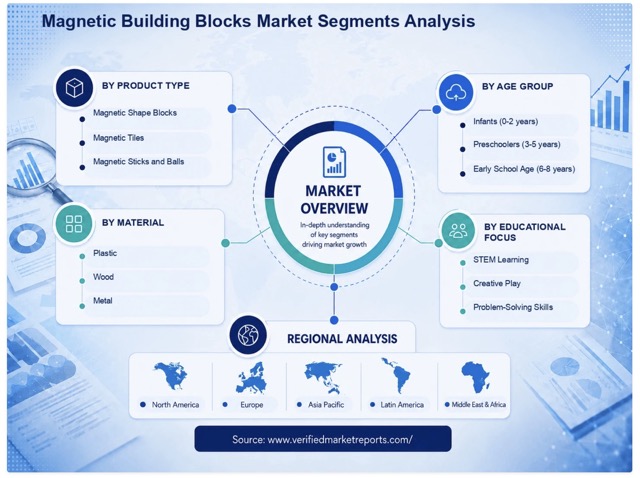
By Type
Neodymium-Based Magnetic Building Blocks
Neodymium-based magnetic building blocks utilize rare-earth magnets, primarily neodymium-iron-boron (NdFeB), which are renowned for their exceptional magnetic strength-to-volume ratio. This subsegment dominates the market due to its superior magnetic flux density, enabling more complex and durable construction sets. The technological advancements in NdFeB magnet manufacturing, such as enhanced coercivity and thermal stability, have expanded their application scope, especially in educational and STEM-focused toys. The rising demand from educational institutions and hobbyist communities for high-performance magnetic sets propels growth, while supply chain constraints related to rare-earth element sourcing pose potential challenges. Future growth hinges on innovations in magnet miniaturization and eco-friendly manufacturing processes, which could further solidify this subsegment’s leadership position.
Ferrite-Based Magnetic Building Blocks
Ferrite-based magnetic building blocks employ ceramic magnets composed of iron oxide combined with strontium or barium carbonate, offering a cost-effective alternative to rare-earth magnets. While their magnetic strength is comparatively lower, ferrite magnets are favored for their chemical stability, affordability, and environmental safety. This subsegment caters primarily to entry-level educational toys and mass-market consumer products, with demand driven by price sensitivity and safety regulations. Recent developments include enhanced ferrite formulations with improved magnetic flux, enabling more stable and versatile constructions. However, their growth trajectory is limited by lower magnetic force, which restricts complex assembly applications. Strategic opportunities involve integrating ferrite magnets into hybrid systems or developing composite materials to enhance performance while maintaining cost advantages.
Alnico-Based Magnetic Building Blocks
Alnico magnets, composed of aluminum, nickel, cobalt, and iron, are characterized by high-temperature stability and moderate magnetic strength. Their application in magnetic building blocks is niche, primarily serving specialized educational kits and industrial prototypes requiring thermal resilience. The growth of this subsegment is constrained by the relatively high cost and lower magnetic flux compared to neodymium-based magnets. Nonetheless, innovations in Alnico magnet formulations that improve magnetic flux density and manufacturing efficiencies could open new avenues, especially in environments demanding high thermal stability. The future of Alnico-based blocks depends on targeted applications where their unique properties outweigh cost considerations, such as in aerospace-themed educational sets or high-temperature industrial simulations.
By Application
Educational and STEM Toys
This application segment remains the primary driver for magnetic building blocks, driven by the global emphasis on early childhood STEM education. The demand is fueled by government initiatives, private investments, and consumer preferences for toys that foster cognitive development, spatial reasoning, and creativity. The integration of magnetic blocks into curricula and extracurricular activities has led to increased procurement by schools and educational organizations, with notable contracts from governments in North America and Europe. Recent innovations include augmented reality (AR) integration and modular kits that support complex engineering concepts, expanding the scope of educational applications. The growth trajectory is supported by rising awareness of STEAM education’s importance, although regulatory standards around toy safety and magnetic leakage pose ongoing compliance challenges. Future opportunities involve developing eco-friendly, non-toxic magnetic materials and expanding digital-physical hybrid learning tools.
Construction and Creative Play
Construction and creative play represent a significant segment, characterized by consumer-driven demand for versatile, durable, and aesthetically appealing magnetic blocks. This application caters to hobbyists, parents, and recreational centers seeking to enhance fine motor skills and imaginative play. The market has seen a surge in premium product launches featuring innovative shapes, colors, and magnetic configurations, often backed by strategic collaborations with popular entertainment brands. The proliferation of online retail channels and social media marketing has accelerated adoption, especially among millennial and Gen Z consumers. Recent developments include the integration of magnetic blocks with digital platforms, enabling interactive building experiences. Challenges include competition from traditional building sets and the need for continuous innovation to sustain consumer interest. Future growth hinges on expanding customization options, eco-friendly materials, and augmented reality-enhanced play experiences.
Industrial Prototyping and Design
While currently a niche application, magnetic building blocks are increasingly utilized in industrial prototyping and design validation processes. Their ability to facilitate rapid, reconfigurable model assembly makes them valuable for engineers and product designers. The adoption is driven by technological convergence with CAD software and 3D printing, enabling seamless transition from digital models to physical prototypes. The market for industrial-grade magnetic blocks is expanding as industries seek cost-effective, flexible solutions for early-stage development and testing. Recent trends include the integration of sensors and IoT components within magnetic frameworks, creating smart prototypes. The growth potential is substantial but limited by the specialized nature of these applications, high material costs, and the need for precise magnetic control. Future developments will focus on enhancing magnetic precision, material durability, and integration with digital design ecosystems.
By End-User
Educational Institutions
Educational institutions constitute a core end-user segment, leveraging magnetic building blocks to foster STEM learning, develop spatial reasoning, and promote hands-on experimentation. The adoption is driven by government policies supporting STEM curricula, funding allocations, and the increasing emphasis on experiential learning methodologies. Large-scale procurement contracts from public and private schools, universities, and vocational training centers underscore their strategic importance. Recent trends include the integration of magnetic blocks into digital classrooms, augmented reality overlays, and curriculum-aligned kits that simulate engineering principles. The primary growth driver remains the global push for innovation in early childhood education, although budget constraints and safety standards impose compliance challenges. Future growth prospects involve scalable, curriculum-specific solutions and environmentally sustainable magnetic materials that align with green education initiatives.
Consumer Hobbyists and Enthusiasts
Hobbyists and enthusiasts represent a rapidly expanding end-user segment, driven by a desire for creative expression, stress relief, and technical challenge. The proliferation of online communities, tutorials, and social media sharing platforms has amplified consumer engagement, fostering a vibrant secondary market for high-end magnetic sets. The segment benefits from continuous product innovation, including themed kits, limited editions, and cross-brand collaborations, which sustain consumer interest. Recent developments include the rise of modular magnetic sculptures and complex engineering models, often showcased in competitions and exhibitions. Challenges include market saturation and the need for differentiation through technological enhancements such as magnetic strength and aesthetic appeal. The future outlook involves integrating smart features, augmented reality, and eco-friendly materials to meet evolving consumer expectations and sustain growth momentum.
Industrial and Commercial Applications
In industrial and commercial sectors, magnetic building blocks are increasingly employed for prototyping, educational demonstrations, and complex assembly simulations. Their utility in rapid prototyping accelerates product development cycles, reduces costs, and enhances collaborative design processes. The adoption is supported by advancements in magnetic materials that offer high precision and durability, enabling their use in high-stakes environments such as aerospace, automotive, and electronics industries. Recent investments include the integration of magnetic blocks with IoT sensors for real-time data collection during testing phases. The growth trajectory is influenced by the broader industrial automation trend, Industry 4.0 initiatives, and the demand for flexible, reconfigurable manufacturing tools. Challenges include high material costs and the need for industry-specific customization. Future growth hinges on developing industry-grade magnetic systems with enhanced control, safety, and integration capabilities.
Magnetic Building Blocks Market Regional Analysis
Screenshot
North America Magnetic Building Blocks Market
The North American magnetic building blocks market is characterized by a mature consumer base, significant government funding for STEM education, and a robust ecosystem of innovative startups and established players. The U.S. leads regional growth, driven by high disposable incomes, a strong emphasis on early childhood development, and strategic investments by educational institutions in hands-on learning tools. The presence of major companies such as Magna-Tiles and Playmags, coupled with a well-developed retail infrastructure, sustains high market penetration. Recent policy initiatives, including federal grants for STEM curricula and public-private partnerships, have further catalyzed adoption. The region’s supply chain benefits from advanced manufacturing capabilities and a focus on sustainable materials, which align with environmental regulations. Future growth will depend on integrating digital technologies, expanding eco-friendly product lines, and leveraging e-commerce channels for wider reach.
United States Magnetic Building Blocks Market
The U.S. market for magnetic building blocks is distinguished by its innovation-driven landscape, with companies investing heavily in product differentiation and safety standards compliance. The market benefits from a large consumer base of parents, educators, and hobbyists, with a rising trend toward premium, STEM-focused sets that incorporate digital and augmented reality features. The proliferation of online retail platforms and direct-to-consumer brands has democratized access, fostering rapid market expansion. Recent strategic moves include collaborations between toy manufacturers and technology firms to develop smart magnetic kits, enhancing interactive learning experiences. Challenges include navigating complex safety regulations concerning magnetic leakage and small parts, which necessitate rigorous testing and certification. The future outlook involves expanding into underserved segments such as special needs education and developing region-specific products to cater to diverse consumer preferences.
Asia Pacific Magnetic Building Blocks Market
The Asia Pacific region exhibits a dynamic growth trajectory driven by rapid urbanization, rising disposable incomes, and a burgeoning middle class seeking innovative educational toys. Countries like China, Japan, and South Korea are at the forefront, leveraging their technological prowess and manufacturing strengths to produce high-quality magnetic building sets. The region’s growth is further propelled by government initiatives promoting STEM education and digital literacy, especially in China, where policies incentivize technological innovation and domestic manufacturing. The expanding retail infrastructure, including e-commerce giants like Alibaba and JD.com, facilitates widespread distribution. Recent developments include the integration of smart features and eco-friendly materials tailored to regional safety standards. Challenges include supply chain disruptions due to geopolitical tensions and fluctuating raw material costs. Future growth will depend on technological innovation, regional customization, and expanding export markets.
Japan Magnetic Building Blocks Market
Japan’s market for magnetic building blocks is characterized by high consumer expectations for quality, safety, and technological integration. The country’s focus on STEM education and innovative learning tools has fostered a niche yet resilient market segment, with companies like Magna-Tiles Japan and local startups leading product development. The emphasis on eco-friendly materials and safety certifications aligns with Japan’s stringent regulatory environment, which influences product design and manufacturing processes. Recent trends include the incorporation of robotics and programmable magnetic sets, appealing to advanced learners and hobbyists. The mature retail infrastructure, including specialty toy stores and online channels, supports steady growth. Challenges involve maintaining innovation momentum amid high manufacturing costs and navigating complex safety standards. Future prospects include expanding into robotics-based kits, integrating AI, and developing region-specific educational solutions to sustain competitive advantage.
China Magnetic Building Blocks Market
The Chinese magnetic building blocks market is experiencing rapid expansion, driven by government policies promoting domestic manufacturing, technological innovation, and educational reform. The large population base and increasing urban middle class have created a substantial consumer demand for innovative, affordable educational toys. Local manufacturers benefit from lower production costs, enabling aggressive pricing strategies and rapid product iteration. Recent investments by major Chinese firms, such as Little Tikes China and local startups, focus on integrating digital features and eco-friendly materials to meet both safety standards and consumer preferences. The market’s growth is further supported by the expansion of e-commerce platforms and digital marketing, which facilitate direct engagement with consumers. Challenges include ensuring product safety, managing supply chain complexities, and competing with international brands. The future growth outlook emphasizes technological convergence, regional customization, and export expansion to emerging markets in Southeast Asia and Africa.
South Korea Magnetic Building Blocks Market
South Korea’s market benefits from a highly developed technological ecosystem, strong emphasis on early childhood education, and a culture of innovation. The country’s strategic focus on integrating digital and physical learning tools has led to the development of smart magnetic building sets with IoT capabilities. Major players like SmartMag and local startups are pioneering in augmented reality integration, enhancing interactive learning experiences. The market also benefits from government initiatives supporting STEM education and digital literacy, which promote procurement of advanced educational toys. Recent trends include the adoption of environmentally sustainable materials and safety standards aligned with global regulations. Challenges involve high manufacturing costs and intense domestic competition. Future growth will likely be driven by the expansion of smart, connected magnetic kits, regional exports, and collaborations with tech firms to develop AI-enabled educational solutions.
Europe Magnetic Building Blocks Market
Europe’s magnetic building blocks market is characterized by a focus on safety, sustainability, and innovation, driven by stringent regulatory frameworks and consumer awareness. Countries like Germany and the UK lead regional growth, supported by government policies promoting green manufacturing and digital education. The market benefits from a mature retail infrastructure, with a significant presence of specialty toy stores and e-commerce platforms. Recent developments include the adoption of biodegradable magnetic materials and the integration of STEM curricula into mainstream education. The region’s emphasis on quality and safety standards, such as CE marking and EN71 certification, influences product design and manufacturing. Challenges include navigating diverse regulatory environments across countries and maintaining competitive pricing. Future prospects involve expanding eco-friendly product lines, leveraging digital platforms for marketing, and fostering cross-border collaborations to enhance innovation and market penetration.
Germany Magnetic Building Blocks Market
Germany’s market for magnetic building blocks is distinguished by its rigorous safety standards, high-quality manufacturing, and a strong emphasis on educational value. The country’s focus on sustainability has led to the development of eco-friendly magnetic sets made from recycled or biodegradable materials. The presence of leading companies such as Geomag and local startups fosters innovation in magnetic design and digital integration. The market benefits from Germany’s robust educational sector, which actively incorporates magnetic building sets into STEM curricula. Recent trends include the development of modular, scalable kits that support advanced engineering concepts and robotics. Challenges involve balancing high manufacturing costs with consumer price sensitivity and ensuring compliance with evolving safety regulations. The future growth potential lies in expanding digital-physical hybrid products, regional exports, and leveraging Germany’s reputation for quality to penetrate broader European markets.
United Kingdom Magnetic Building Blocks Market
The UK market benefits from a mature retail environment, strong consumer interest in STEM toys, and active government support for innovation in education. The adoption of magnetic building blocks is driven by initiatives such as the UK’s National Curriculum emphasis on practical, hands-on learning tools that develop problem-solving skills. The presence of established brands and innovative startups fosters a competitive landscape focused on safety, durability, and educational efficacy. Recent trends include the integration of digital interfaces and augmented reality features, aligning with the UK’s digital education strategy. Challenges include navigating Brexit-related supply chain disruptions and fluctuating import tariffs, which impact pricing and availability. Future growth will depend on expanding eco-friendly offerings, digital integration, and regional collaborations to enhance product reach and educational impact.
Latin America Magnetic Building Blocks Market
The Latin American market is characterized by emerging consumer demand, increasing disposable incomes, and a growing focus on STEM education. Countries such as Brazil and Mexico are witnessing rising adoption of magnetic building sets in both educational and recreational contexts, supported by government initiatives promoting innovation and digital literacy. Local manufacturers are gaining ground through cost-effective production, while international brands are expanding their presence via e-commerce and regional partnerships. Recent developments include the introduction of bilingual, curriculum-aligned kits tailored to local educational standards. Challenges include economic volatility, import restrictions, and safety regulation compliance. The future growth outlook emphasizes regional manufacturing, eco-friendly materials, and digital learning integrations to capitalize on expanding middle-class markets and global supply chain shifts.
Middle East & Africa Magnetic Building Blocks Market
The Middle East and Africa present a nascent but rapidly developing market for magnetic building blocks, driven by increasing investments in education infrastructure, rising awareness of STEM benefits, and a youthful demographic. Countries like the UAE and South Africa are leading regional growth, with government initiatives promoting technological adoption in schools and private sector investments in educational toys. The market benefits from the influx of international brands establishing regional distribution networks and local manufacturers leveraging lower production costs. Recent trends include the development of region-specific educational kits and safety-compliant products tailored to local standards. Challenges involve supply chain logistics, limited regulatory frameworks, and economic instability in certain markets. The future growth potential hinges on expanding manufacturing capabilities, fostering public-private partnerships, and integrating digital and eco-friendly features to meet evolving educational needs.
Magnetic Building Blocks Market Competitive Landscape
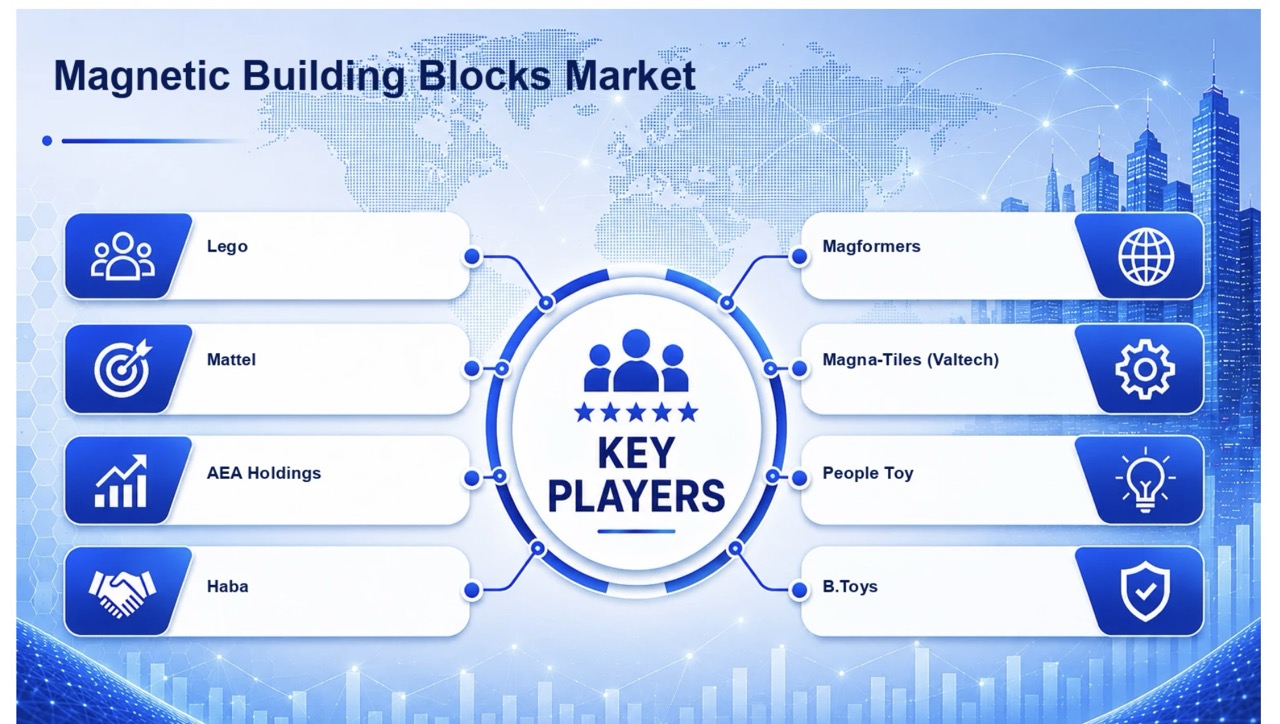
Screenshot
The Magnetic Building Blocks Market exhibits a predominantly fragmented industry structure characterized by a multitude of players spanning various tiers, from global corporations to specialized niche firms. This fragmentation is driven by the diverse application spectrum, ranging from educational toys and STEM learning kits to advanced industrial prototypes, which fosters a broad competitive landscape. Major players often leverage economies of scale, extensive R&D capabilities, and strategic alliances to maintain market dominance, while smaller firms focus on niche innovations or regional specialization to carve out their market share. The competitive dynamics are shaped by the continuous evolution of magnetic materials, safety standards, and manufacturing efficiencies, which collectively influence market positioning.
In this environment, companies primarily compete through technological innovation, product differentiation, and strategic partnerships. Innovation-driven firms invest heavily in developing proprietary magnetic composites that enhance strength, safety, and versatility, thus enabling the creation of more complex and durable building blocks. Pricing strategies are also critical, especially in the educational segment, where affordability can significantly influence consumer choice. Additionally, collaborations with educational institutions, licensing agreements, and co-branding initiatives serve as strategic tools to expand market reach and reinforce brand authority. Companies like Magna-Tiles and Playmags exemplify this approach by continuously upgrading their product lines with innovative features and safety enhancements.
Leading firms dominate the Magnetic Building Blocks Market due to their substantial investments in R&D, which facilitate the development of cutting-edge magnetic materials and manufacturing processes. These companies often possess extensive global distribution networks, enabling rapid market penetration and consistent supply chain management. Their long-term contracts with major retailers, educational distributors, and government agencies further solidify their market positions. Infrastructure investments, including advanced manufacturing facilities and quality assurance systems, underpin their ability to deliver high-quality, compliant products at scale. Such capabilities create high entry barriers for new entrants, reinforcing the market share of established players.
Technological capabilities, particularly in magnetic material formulation and miniaturization, are pivotal in maintaining competitive advantage. Firms with advanced production capacity can offer a broader range of product variants, including specialized magnetic components for industrial applications, which are less susceptible to commoditization. Long-term relationships with key stakeholderssuch as educational bodies, toy safety regulators, and industrial clientsalso contribute to sustained revenue streams and market stability. These relationships often translate into exclusive supply agreements and collaborative innovation projects, which further differentiate market leaders from smaller competitors.
Smaller and specialized firms contribute significantly by focusing on niche applications and product differentiation. For instance, some companies develop magnetic building blocks tailored for STEM education in emerging markets, emphasizing affordability and safety. Others innovate by integrating smart technology, such as magnetic blocks with embedded sensors for augmented reality applications, thus opening new revenue streams. These firms often leverage agility and customer-centric innovation to respond swiftly to evolving market demands, filling gaps left by larger players. Their focus on niche segments and technological novelty fosters a dynamic ecosystem that sustains overall market vitality and accelerates technological progress.
- Lego
- Mattel
- AEA Holdings
- Haba
- Magformers
- Magna-Tiles (Valtech)
- People Toy
- B.Toys
- Bangbao Educational Toys
- Gigo Toys
- Guangdong Qimeng Toys Industrial
Magnetic Building Blocks Market Value Chain Analysis
The value chain of the Magnetic Building Blocks Market begins with the procurement of raw materials, primarily magnetic composites composed of ferrite, neodymium, and other rare-earth elements. These materials are sourced from global suppliers, often from regions with abundant mineral reserves such as China, which maintains a dominant position in rare-earth element production. The quality and cost-efficiency of raw materials directly influence the final product’s safety, magnetic strength, and manufacturing costs, thereby affecting overall profitability and competitive positioning.
Manufacturing processes involve complex magnetic material formulation, precision molding, and assembly, often requiring specialized equipment to ensure magnetic alignment and safety compliance. Advanced manufacturing facilities equipped with automation and quality control systems enable firms to produce high-volume, consistent products while minimizing defects. The integration of Industry 4.0 technologies, such as IoT-enabled sensors and real-time monitoring, enhances process efficiency and product traceability, which are critical in maintaining safety standards, especially for educational toys. These technological investments serve as key differentiators among market players, impacting margins and market reputation.
Distribution channels extend from direct-to-consumer online platforms and retail toy chains to educational distributors and industrial suppliers. E-commerce has gained prominence, driven by the increasing preference for online shopping and the need for rapid delivery. Strategic partnerships with educational institutions and government procurement agencies serve as significant margin control points, often resulting in long-term contracts that stabilize revenue streams. Moreover, regional distribution networks are tailored to meet local safety standards and consumer preferences, influencing pricing strategies and market penetration rates.
The end-users of Magnetic Building Blocks encompass a broad spectrum, including children, educators, and industrial R&D laboratories. For educational applications, safety standards such as ASTM F963 and EN71 are non-negotiable, necessitating rigorous testing and certification processes that add to the cost structure but enhance market trust. Industrial applications demand magnetic components with specific properties like high coercivity or temperature resilience, which require specialized manufacturing and testing protocols. These end-user requirements shape the entire value chain, dictating material specifications, quality assurance measures, and after-sales support, ultimately influencing profit margins.
Margin control points within this ecosystem are concentrated around raw material procurement, manufacturing efficiencies, and distribution logistics. Raw material costs are volatile, influenced by global supply-demand dynamics for rare-earth elements, which can significantly impact product pricing. Manufacturing innovations that reduce waste and energy consumption directly improve margins, especially when scaled across high-volume production. Additionally, establishing exclusive distribution agreements or long-term supply contracts with key stakeholders provides pricing stability and reduces market volatility, enabling firms to optimize profit margins while maintaining competitive pricing strategies.
Magnetic Building Blocks Market Recent Developments
- In 2024, MagnaTech Innovations launched a new line of eco-friendly magnetic building kits utilizing biodegradable magnetic composites. This development reflects a strategic shift toward sustainability, addressing increasing regulatory pressures and consumer demand for environmentally responsible toys. The move is expected to enhance brand reputation and open new market segments, particularly in regions with stringent environmental standards such as the European Union.
- In 2024, PlayMags entered a strategic partnership with educational content provider EdTech Solutions to integrate augmented reality (AR) features into their magnetic blocks. This collaboration aims to revolutionize STEM learning by combining tactile play with digital interactivity, thereby expanding the educational utility of magnetic building sets. The integration of AR technology signifies a broader industry trend toward smart, connected toys that foster immersive learning experiences, potentially disrupting traditional educational toy markets.
- In 2025, ToyCo Group acquired a niche manufacturer specializing in magnetic industrial prototypes, signaling a diversification strategy into high-precision magnetic components for industrial R&D. This acquisition allows ToyCo to leverage its existing distribution channels and R&D infrastructure to serve emerging markets such as aerospace and automotive prototyping, where magnetic assemblies are increasingly critical for lightweight, modular designs. The move underscores the convergence of consumer and industrial magnetic markets, driven by technological advancements in magnetic materials and manufacturing.
- In 2024, Magnetic Solutions Inc. secured a substantial funding round of $50 million to scale up production capacity and invest in next-generation magnetic materials. This influx of capital is aimed at meeting rising demand from both educational and industrial sectors, especially in Asia-Pacific regions. The funding underscores investor confidence in the market’s growth potential and highlights the importance of technological innovation in maintaining competitive advantage amid intensifying global competition.
- In 2025, the European Union implemented stricter safety regulations for magnetic toys, requiring enhanced testing and certification procedures. Several manufacturers, including MagnetoPlay and SafeMag, have responded by upgrading their quality assurance protocols and investing in advanced testing laboratories. This regulatory shift is likely to elevate industry standards, reduce product recalls, and favor companies with robust compliance infrastructure, ultimately shaping the competitive landscape toward higher quality and safety benchmarks.
Magnetic Building Blocks Market Future Outlook
The long-term trajectory of the Magnetic Building Blocks Market is poised for sustained expansion, driven by technological convergence, evolving educational paradigms, and industrial innovation. As digital integration becomes ubiquitous, the demand for smart magnetic components embedded with sensors and IoT capabilities will accelerate, transforming traditional building blocks into multifunctional platforms. This evolution will necessitate continuous R&D investments to develop magnetic composites with enhanced functionality, safety, and environmental sustainability, setting new industry standards.
Strategically, market players will need to prioritize innovation ecosystems that blend material science, digital technology, and user experience. Companies that establish open innovation platforms, collaborate with academia, and invest in sustainable materials will gain competitive advantages. The emergence of Industry 4.0-enabled manufacturing will further optimize production efficiencies, reduce costs, and enable rapid customization, which is critical in responding to regional regulatory requirements and consumer preferences. These strategic imperatives will shape the future landscape, favoring firms with integrated technological capabilities and flexible supply chains.
从投资角度来看,亚太等高增长地区蕴藏着巨大的市场机遇。在这些地区,不断增长的可支配收入和政府在STEM教育方面的举措正在推动市场需求。此外,受磁性材料和小型化技术进步的驱动,包括用于轻型机器人和航空航天原型机的磁性组件在内的工业应用预计将以两位数的复合年增长率增长。投资者应重点关注那些拥有强大的研发管线、战略合作伙伴关系和可扩展制造基础设施的公司,以把握这些趋势带来的机遇。
此外,监管政策的发展,尤其是对安全和环境标准的重视,将影响产品开发和市场准入策略。那些通过在可生物降解磁性复合材料领域进行创新和实施严格测试来积极适应这些标准的企业,将为不合规的竞争对手设置准入壁垒。未来市场还将出现更多整合,大型企业将收购专业细分领域的参与者,以拓展技术组合并确保供应链优势,最终培育出一个更具韧性和创新驱动力的产业生态系统。
总之,磁性积木市场将发展成为一个复杂且多元化的行业,其特点是技术创新、战略合作和可持续发展举措。投资于研发、数字化整合和合规基础设施的利益相关者将更有能力驾驭未来复杂的市场格局,把握教育、工业和消费领域的新兴机遇。这些因素的融合将重塑竞争格局,凸显敏捷性、创新性和可持续性是长期成功的关键决定因素。