Magnetic Toys Market Overview & Growth Projections
2025 Market Size at 3.2 Billion USD Projected to Reach 6.14 Billion USD by 2032 with a CAGR of 9.75%

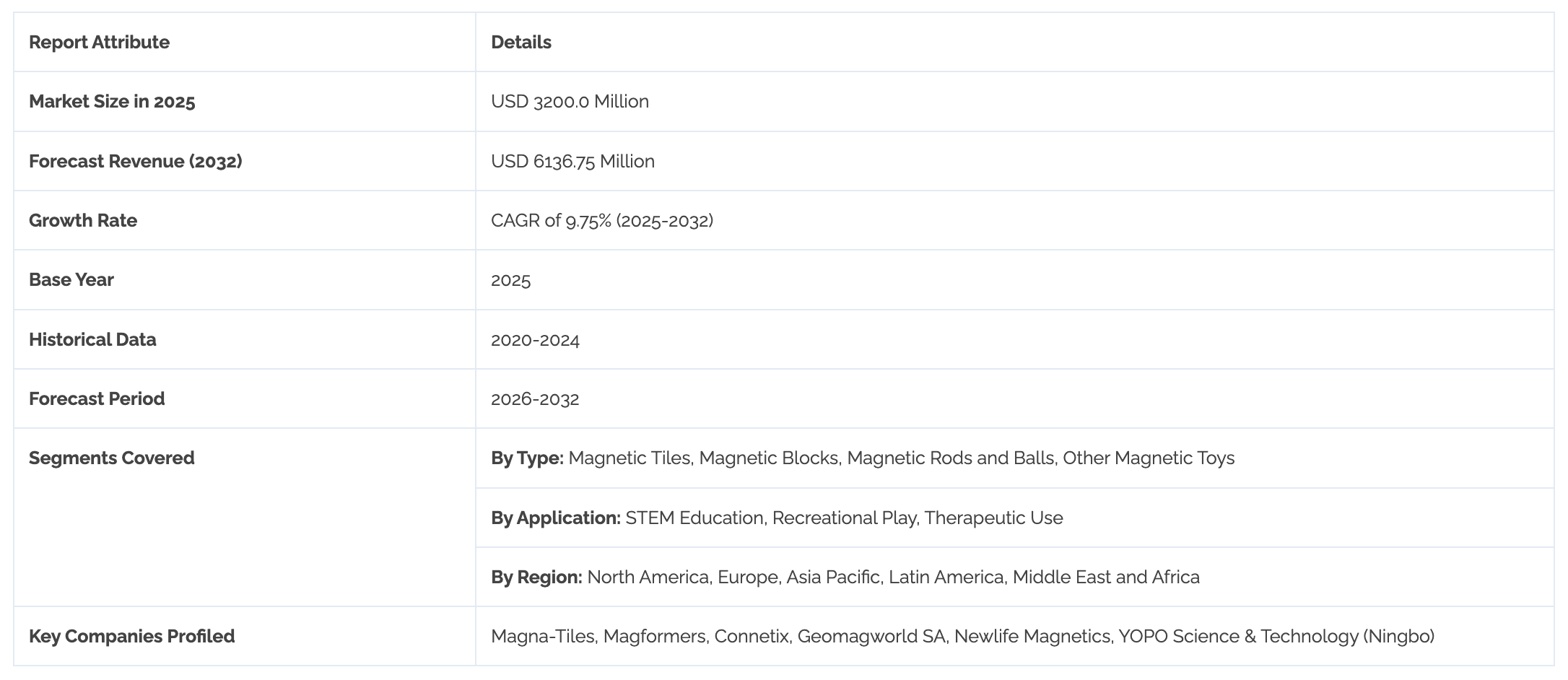
In 2025, the Magnetic Toys market stood at USD 3.20 Billion. Over the next several years, it is projected to expand steadily to USD 6.14 Billion by 2032. That path implies a 9.7% CAGR, reflecting a sustained step-up in demand rather than a one-off spike. The numbers show a broad-based climb from 2025 onward, with the market moving from USD 3.71 Billion in 2026 to USD 6.14 Billion by 2032.
The growth trajectory looks durable because demand for magnetic play keeps widening while supply catches up over time. As the market moved from USD 3.20 Billion in 2025 to USD 4.49 Billion in 2028, the pace suggested that manufacturers could scale production and product availability in line with rising consumer uptake. By 2030 the market reached USD 4.89 Billion, and it then accelerated further to USD 5.39 Billion in 2031 before landing at USD 6.14 Billion in 2032—an outcome consistent with both deeper product penetration and ongoing expansion in distribution channels.
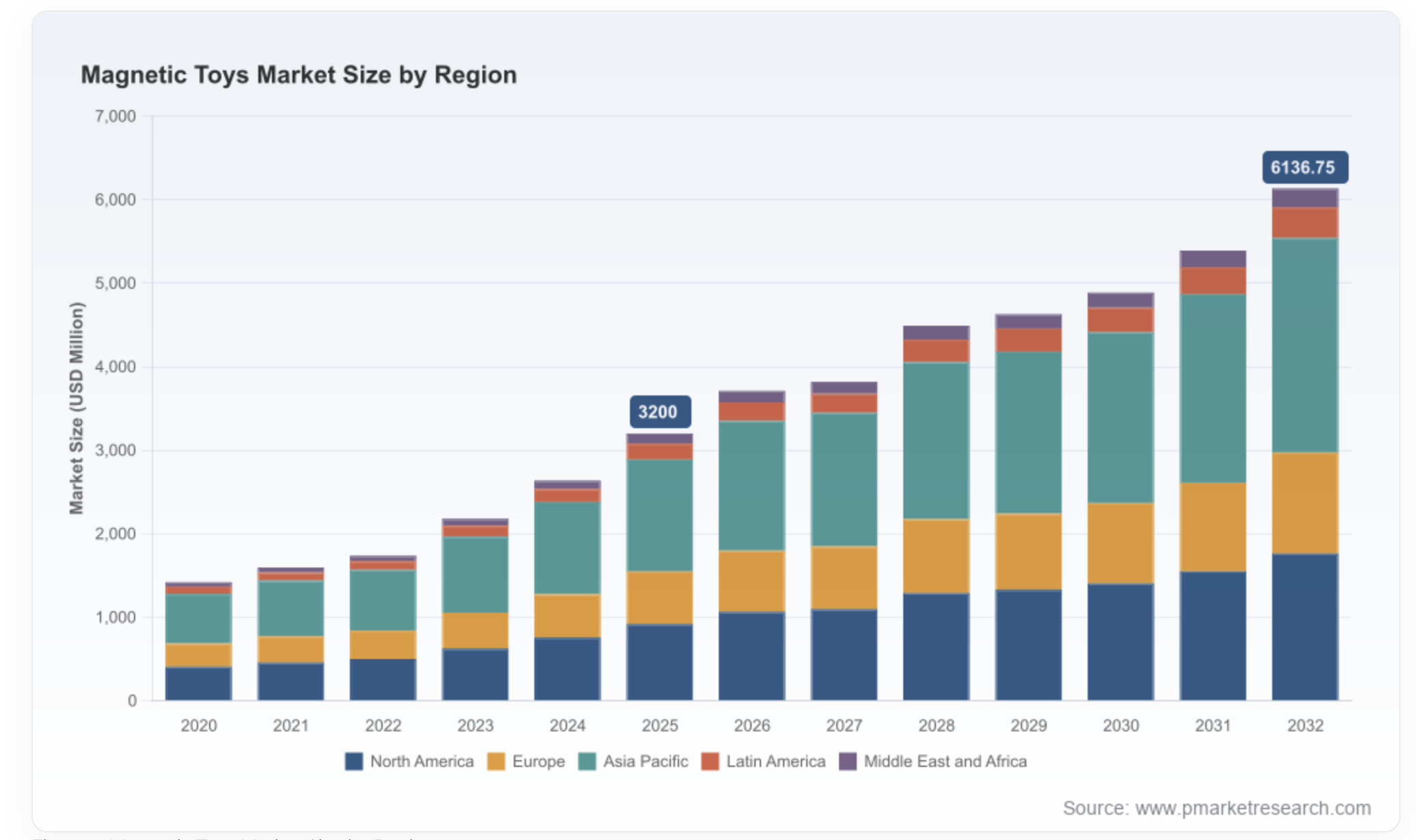
Figure 1. Magnetic Toys Market Size by Region
Global Magnetic Toys Market Size & Growth Rate
Projected CAGR (2025-2032): 9.75%
Market Dynamics & Strategic Trends
Core Driver Identified as Rising Emphasis on STEM Education and Parental Awareness
In 2025, a rising emphasis on STEM education globally, growing parental awareness of cognitive development benefits, and the integration of magnetic toys into preschool curricula drove sustained demand. Asia Pacific dominated the market in 2025, accounting for an estimated majority of regional demand as rapid urbanisation and rising middle-class spending in China and India increased adoption and government support promoted innovative learning tools. The competitive landscape remained moderately concentrated, with firms focusing on product innovation, safety compliance and expansion through e-commerce channels to capture classroom and at-home budgets.
Manufacturers began incorporating smart features such as AR integration and modular designs with stronger, safer magnets to enhance interactivity and educational value; these trends will accelerate product differentiation between 2026 and 2032. However, safety concerns around small, ingestible magnets and stiff competition from traditional building toys limited penetration in price-sensitive markets. U.S. regulators continued to enforce mandatory toy safety standards that prohibit high-powered magnets that pose ingestion hazards in children’s products, which will force stricter design and compliance choices by manufacturers ¹. As a result, companies will prioritise certified safety features and platformed play experiences—using AR and modularity to justify higher price points in developed markets while leveraging e-commerce to offer lower-priced, safety-compliant variants to cost-conscious buyers.
Regional Market Insights
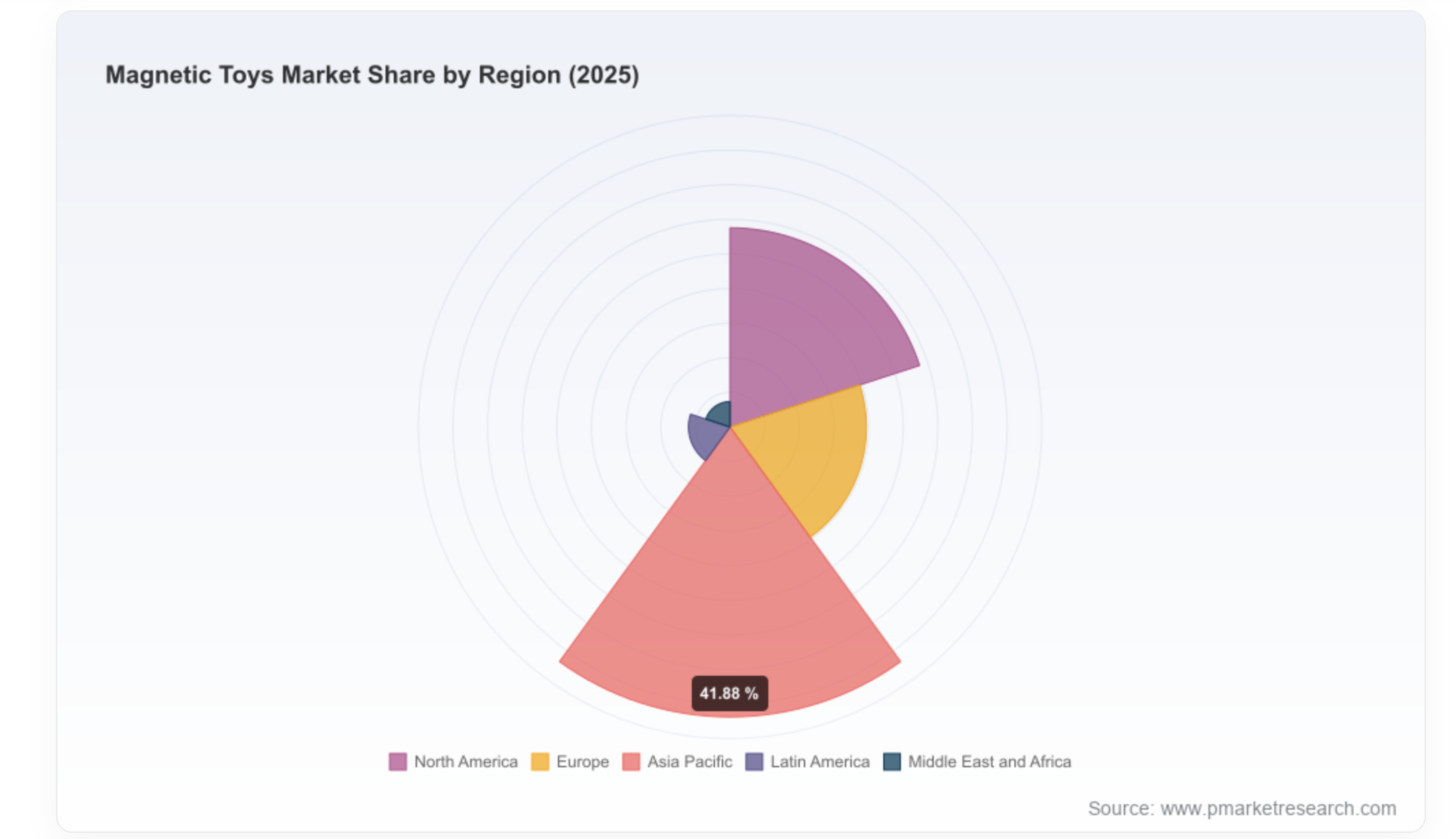
Asia Pacific commands magnetic toys market with 41.9% share
Asia Pacific remained the undisputed leader of the magnetic toys market in 2025, accounting for an estimated 41.9% of global sales and generating USD 1.34 Billion in revenue. China anchored this dominance through its vast manufacturing base, low-cost production capabilities, and access to critical raw materials. The country’s control of over 90% of global NdFeB magnet output shaped supply chains, enabling regional producers to offer competitive pricing and rapid delivery despite tightening export conditions ⁵. High demand from large consumer markets such as Japan and South Korea added further momentum, supported by mature retail networks and rising adoption of magnetic STEM toys in educational settings.
North America and Europe followed at a considerable distance, capturing approximately 28.8% and 19.7% of the market respectively. The U.S. market reflected strong demand for premium magnetic toys, with distribution channels leaning heavily on e-commerce and big-box retailers. European consumers favored designs with higher safety and sustainability certifications, driving imports from specialized manufacturers. Latin America, representing roughly 6.0% of global share, showed potential in urban centers like São Paulo and Mexico City, where middle-class families expanded discretionary spending on educational play. The Middle East and Africa accounted for just 3.7%, but markets in the Gulf states demonstrated readiness to invest in niche, luxury toy segments.
Magnetic Toys Market By Type Analysis
Magnetic Tiles Captured the Largest Revenue Share in 2025
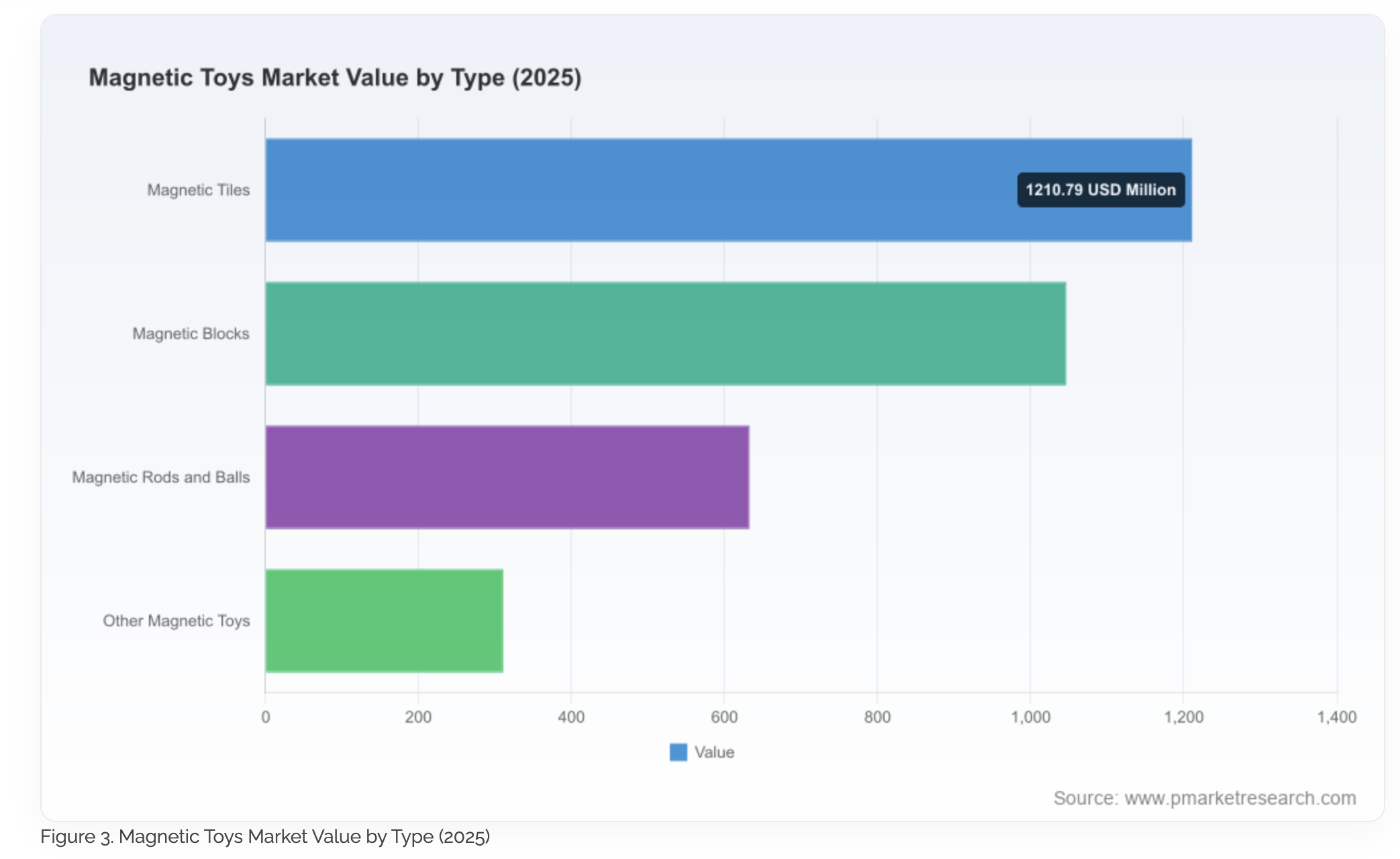
In 2025, magnetic tiles emerged as the undisputed leader in the global magnetic toys market, generating USD 1.21 Billion and capturing nearly 37.8% of total industry revenue. Their dominance reflects a blend of design versatility, durability, and strong appeal in both educational settings and consumer households. Schools and early learning centers increasingly leaned on tiles for STEM-focused activities, thanks to their easy interlocking structure and capacity to support spatial reasoning development. This high adoption was further underpinned by supply-side resilience, with manufacturers able to control production efficiencies despite rising neodymium costs, which reached approximately USD 244.90 per kg by May 2026 amid supply constraints ⁶.
Magnetic blocks, the second-largest segment, accounted for an estimated USD 1.05 Billion and 32.7% of the market in 2025, appealing strongly to the home-use category where compact, versatile playsets fit smaller living spaces. Meanwhile, magnetic rods and balls represented approximately USD 632.41 Million, or 19.8% of global sales, carving a niche among older children and hobbyists interested in complex structures. Other magnetic toys—ranging from specialty collectibles to functional desk items—made up 9.7% of revenue, serving as impulse purchases and gift market staples. Despite magnetic tiles’ lead, these secondary segments play a critical role in diversifying price points and catering to distinct consumer behaviors, ensuring manufacturers maintain breadth across product portfolios.
Magnetic Toys Market By Application Analysis
STEM Education Captured Over Half of Global Magnetic Toy Revenue in 2025
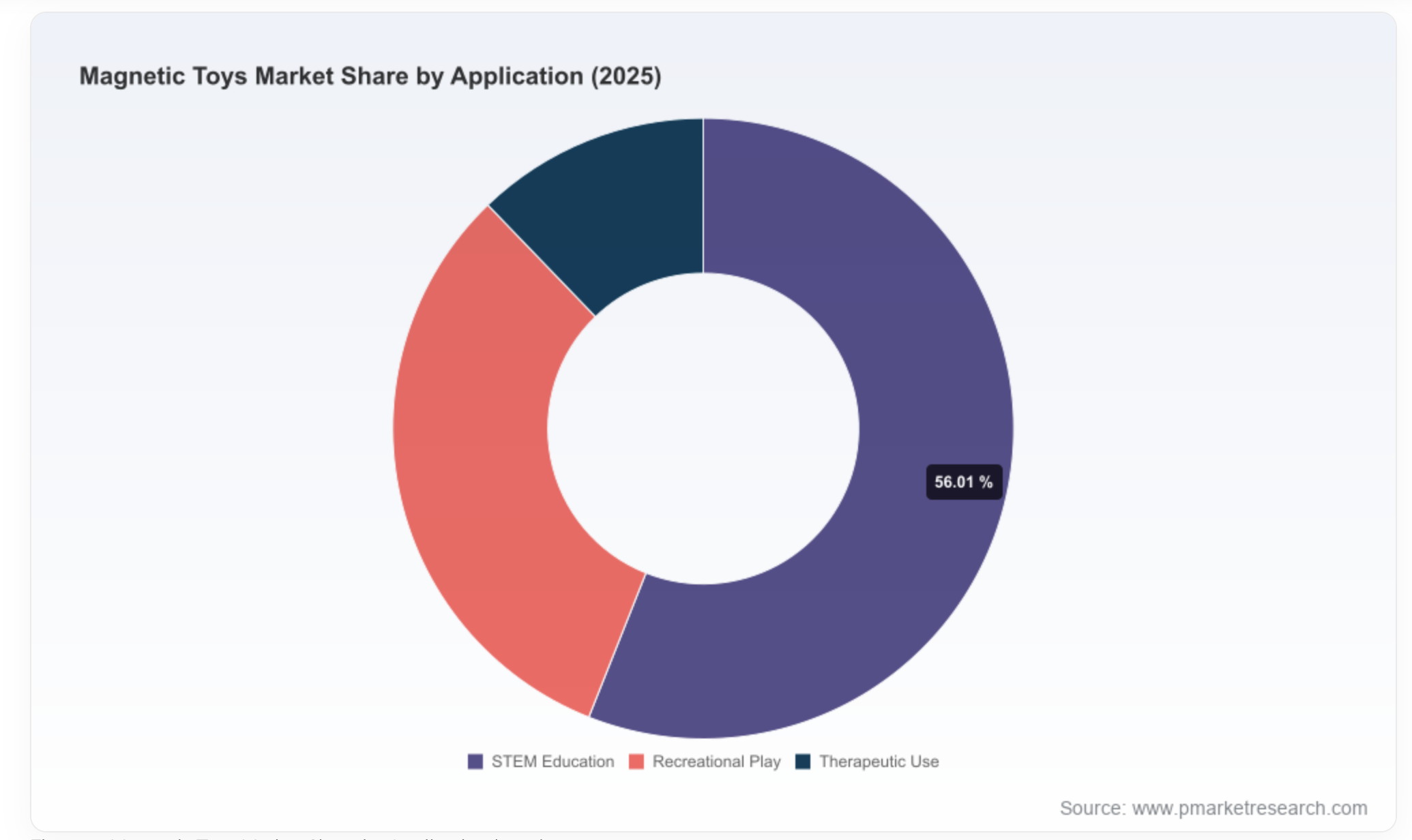
In 2025, STEM Education emerged as the undisputed leader in the magnetic toys market, capturing nearly 56.0% of global revenue, equivalent to USD 1.79 Billion. The dominance of this segment reflected the rising integration of magnetic construction tools into classroom science, technology, engineering, and mathematics programs. Schools and training centers increasingly used these products to promote spatial reasoning, problem-solving, and collaborative learning. The appeal lay in their reusability, tactile engagement, and hybrid compatibility with digital lesson plans. Procurement decisions were often driven by curriculum alignment and safety certifications, reinforcing STEM Education’s commanding position.
Recreational Play accounted for approximately 31.8% of revenue at USD 1.02 Billion in 2025. This segment benefited from strong demand among households seeking educational entertainment, where magnetic toys served as both creative and stress-relieving tools. Manufacturers targeted parents with modular designs and expansion kits, emphasizing versatility and affordability. Therapeutic Use, representing around 12.2% of global revenue or USD 390.41 Million, played a niche yet critical role, particularly in occupational therapy and rehabilitation contexts. Clinics valued magnetic toys for their ability to improve fine motor skills and cognitive flexibility, making them integral to specialized treatment workflows. Together, these secondary segments provided complementary growth avenues that balanced the market beyond its STEM-focused core.
Magnetic Toys Competitive Landscape
Key Players Defined by Magna-Tiles, Magformers, and Others
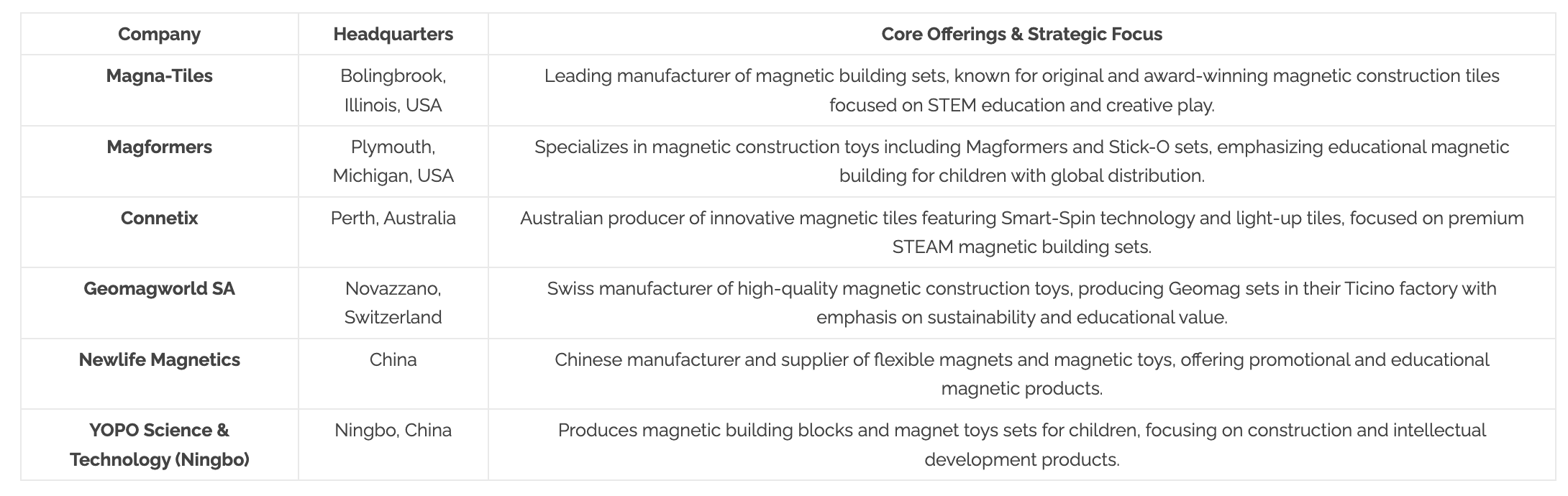
In 2025 the magnetic toys market showed moderate concentration, with established brands and regional specialists forming the competitive core. Magna-Tiles, Magformers, Connetix, Geomagworld SA, Newlife Magnetics and YOPO Science & Technology (Ningbo) together drove product differentiation through engineering, STEAM positioning and sustainable manufacturing, while Chinese manufacturers focused on volume supply and OEM channels. Companies leaned on innovation in tile design and safety messaging to defend margins, and they pushed direct-to-consumer and e-commerce channels to broaden distribution and capture nearly the premium retail segment.
To preserve or extend their positions, firms are prioritising rapid product innovation, tighter safety protocols and platform expansion. Magna-Tiles will unveil its latest magnetic building innovations and new range at Toy Fair 2026 ². Connetix will showcase a rechargeable light tile and other enhancements in a new Light Star Pack at the same event, underlining a shift toward sensory and premium features ³. At the same time, a high-powered magnet recall will sharpen regulatory focus and force wider adoption of enhanced compliance testing across the sector, favouring well-resourced brands that can absorb certification costs and scale e-commerce fulfilment quickly .
Magnetic Toys Competitive Landscape
Key Players Defined by Magna-Tiles, Magformers, and Others
In 2025 the magnetic toys market showed moderate concentration, with established brands and regional specialists forming the competitive core. Magna-Tiles, Magformers, Connetix, Geomagworld SA, Newlife Magnetics and YOPO Science & Technology (Ningbo) together drove product differentiation through engineering, STEAM positioning and sustainable manufacturing, while Chinese manufacturers focused on volume supply and OEM channels. Companies leaned on innovation in tile design and safety messaging to defend margins, and they pushed direct-to-consumer and e-commerce channels to broaden distribution and capture nearly the premium retail segment.
To preserve or extend their positions, firms are prioritising rapid product innovation, tighter safety protocols and platform expansion. Magna-Tiles will unveil its latest magnetic building innovations and new range at Toy Fair 2026 ². Connetix will showcase a rechargeable light tile and other enhancements in a new Light Star Pack at the same event, underlining a shift toward sensory and premium features ³. At the same time, a high-powered magnet recall will sharpen regulatory focus and force wider adoption of enhanced compliance testing across the sector, favouring well-resourced brands that can absorb certification costs and scale e-commerce fulfilment quickly 。